


If you’re a Medical Science Liaison (MSL), you already know the daily grind. Between spending hours digging through publications for pre-meeting planning, fighting for access to Key Opinion Leaders (KOLs), and facing massive spreadsheets of field insights, it often feels like administrative work is standing in the way of building meaningful clinical relationships.
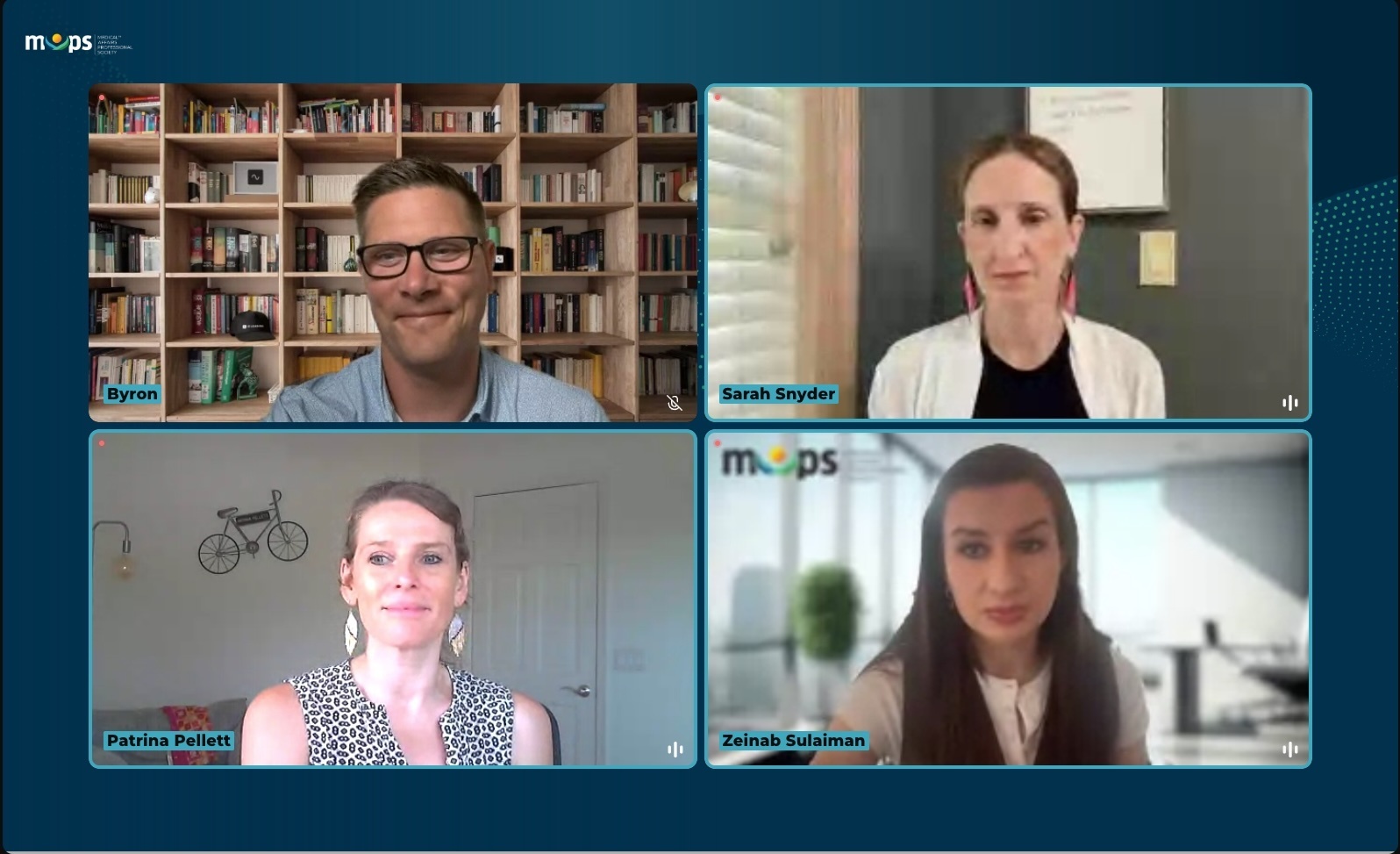
At Sorcero, we hear you. We understand that the MSL role has always been one of the most relationship-driven positions in Pharma. That’s why we teamed up with MAPS to host an honest conversation about how AI is fundamentally shifting HCP engagement, featuring an elite panel of industry experts:
- Byron Burnette, Ph.D. – Executive Director, Oncology Field Medical at Gilead Sciences
- Patrina Pellett, Ph.D. & Sarah Snyder, PharmD – Co-CEOs of MSL Mastery
- Zeinab Sulaiman – Head of Medical Transformation & Applied AI at Sorcero
The consensus from these experts is a relieving one: AI isn't here to replace the MSL. Instead, it acts as a strategic partner that absorbs the busywork, freeing you up to be more impactful.
We’ve summarized the biggest breakthroughs below, but to truly experience the live energy and learn practical prompting strategies from these leaders, you'll want to watch the full conversation. Click here to watch the full recording on the official MAPS website.
1. The 45-Hour Gift: Unleashing Next-Gen Workflow Efficiency
Historically, pre-meeting planning was an exhausting battle against information overload. MSLs had to manually track down publications, digital footprints, and social media updates for every single Key Opinion Leader (KOL). Today, AI acts as a pattern-recognition engine that summarizes and synthesizes this data in seconds.
The tangible time savings are staggering:
- The 90-Minute Metric: Patrina has seen that after MSLs have been trained on using AI, MSLs have saved 90 minutes in pre-meeting preparation time per KOL.
- The Compounding Effect: For an MSL managing a standard panel size of 30 KOLs, this translates directly into 45 hours of reclaimed time.
- Accelerated Documentation: AI agents are also helping the upstream insights gathering process and speeding up the downstream reporting process, saving MSLs roughly 20 minutes of writing time per insight.
2. Higher Impact, Not "More Work"
A common anxiety among field teams is that automation will encourage leadership to simply double the expectations for engagement and activity metrics.. Byron Burnette, Ph.D. (Executive Director, Oncology Field Medical at Gilead), dispelled this myth with a foundational principle:
The purpose of employing AI is not necessarily to do more. It's to be more impactful... Our key principle at Gilead at the very least is we want higher quality work, not more work.
By absorbing heavy cognitive loads and administrative friction, AI frees up MSLs to focus on the elements of field medicine that matter most:
- Perfecting Soft Skills: Shorter HCP face-time windows mean MSLs must ask sharper, more strategic questions. AI gives teams the bandwidth to build confidence, practice communication, and master the art of negotiation.
- Focusing on the "How" vs. the "What": Instead of acting as simple "information couriers" delivering scientific data, MSLs can focus on how that data integrates into a provider's unique psychological and clinical framework.
3. From Field Noise to Strategic Signals
Medical Affairs has long struggled with a fragmented insights loop, historically relying on team members to manually read and categorize endless spreadsheets. AI bridges this gap, allowing organizations to instantly aggregate data to uncover regional or national trends.
Instead of presenting corporate stakeholders with opinions of a single doctor, AI empowers Medical Affairs to speak with much more gravity. Imagine confidently telling cross-functional partners that 80% (or more!) of top national KOLs share a specific clinical perspective. Bringing forward aggregate-level trends and signals help cements Medical Affairs' position as a true strategic peer capable of compliantly informing commercial, R&D, and payer engagement strategies.
4. The Irreplaceable MSL: Human Connection as the Ultimate Equalizer.
What are the skills AI can never replace? Sarah Snyder, PharmD (Co-CEO of MSL Mastery), shared the results of a LinkedIn poll of over 550 medical professionals. The top three irreplaceable traits were:
- Human Connection: Authentic trust, empathy, and relationship building.
- Strategic Thinking: Contextualizing raw data within complex real-world environments.
- Scientific Interpretation: Evaluating the clinical nuances an algorithm might miss.
The panel’s final advice to the audience was simple: Stop overthinking and start experimenting. Whether you build an automated "email digest agent" like Patrina Pellett's beloved Debbie, or design a custom Devil's Advocate agent to stress-test your scientific arguments, AI is an equalizer that rewards curiosity.
Learn to Build Your Own AI Strategy
The future of field medical isn't about data retrieval—it’s about translating data that drives meaningful outcomes. Ready to see how leading organizations are deploying AI agents and transforming field insights?
Click here to go to the official MAPS website and watch the full webinar recording.